
Oldest Shops in Paris: 9 Historic Boutiques Worth a Visit

Some of the best culture in Paris is not behind a ticket desk. It is behind a shop counter that has been serving customers since the 1600’s.

As private guides, we have learned one thing that works for every group, whether you are travelling with teenagers, foodies or a partner who “doesn’t do museums”: take them into the city’s oldest shops. Each one is a small museum you can touch, smell and very often taste. The staff still wrap your purchase the way they did a century ago, and the stories behind the counter are as good as anything you will hear at the Louvre.

Below are nine historic Paris shops we love, from a jeweller founded in 1613 to the pastry shop where the baba au rhum was born. For each one you will find a little history, what to buy, and a practical tip so you can visit like a Parisian rather than a tourist.

They are also the answer to a question we hear all the time: what can I bring home from Paris that isn’t a fridge magnet.
The oldest shops in Paris at a glance

Nine addresses, four centuries, and most of them within a 20-minute walk of the Louvre.

Shop

Founded  

Address

Known for

What to buy

Mellerio

1613

9 rue de la Paix, 2nd

Jeweller to queens

Fine jewellery (from about €500)

Trudon

1643

78 rue de Seine, 6th

Candle maker to the royal court

Scented candles, royal taper candles

À la Civette

1716

157 rue Saint-Honoré, 1st

Oldest tobacconist in Paris

Vintage-style lighters, collectibles

Stohrer

1730

51 rue Montorgueil, 2nd

Oldest pastry shop in Paris

Baba au rhum, puits d’amour

Meert

1761 (Lille)

16 rue Elzévir, 3rd

Vanilla-filled waffles

Gaufres in gift boxes

E. Dehillerin

1820

18–20 rue Coquillière, 1st

Julia Child’s cookware shop

Copper pans, pastry tools

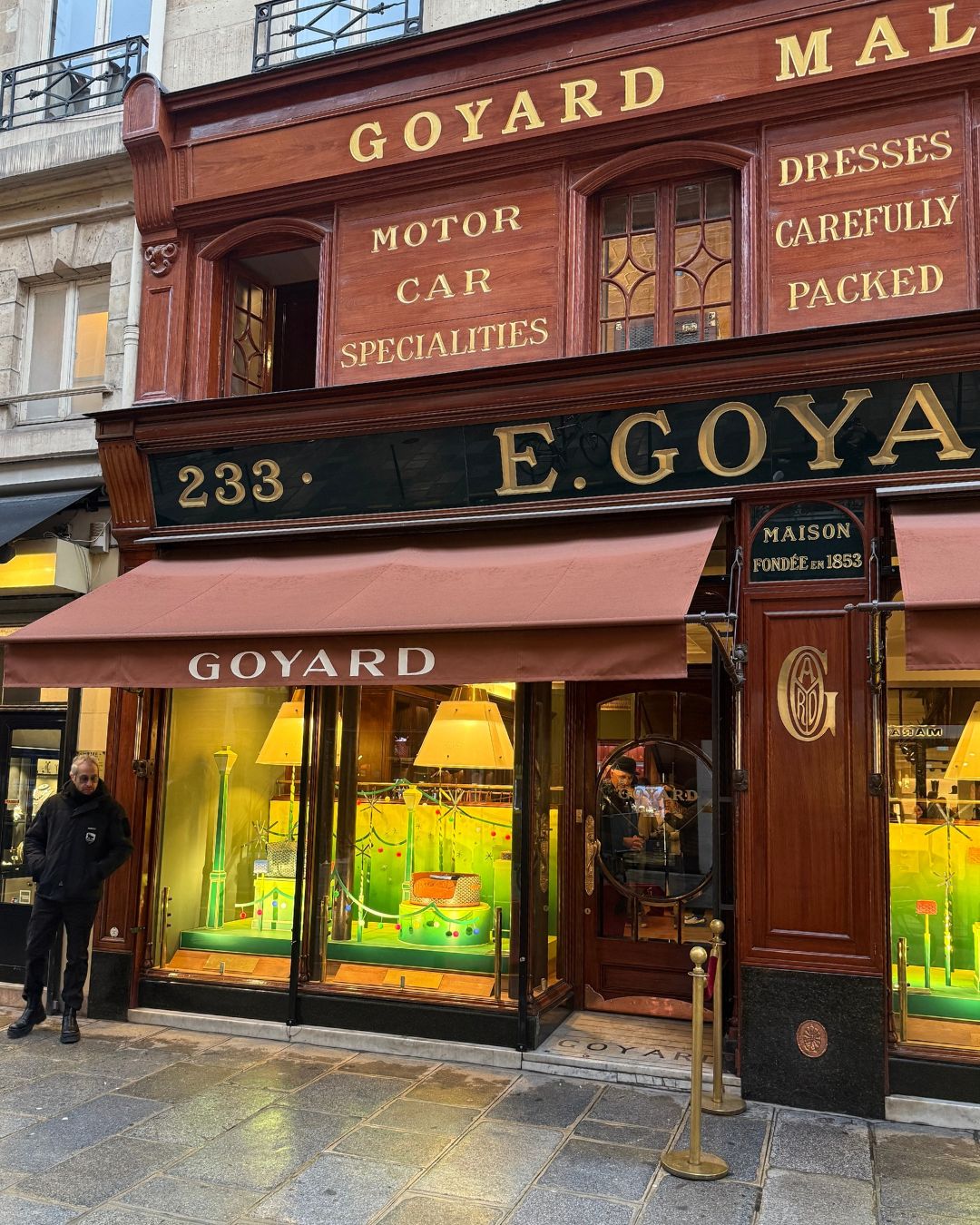
Goyard

1853

233 rue Saint-Honoré, 1st

Historic trunk maker

Leather goods (bonus stop)

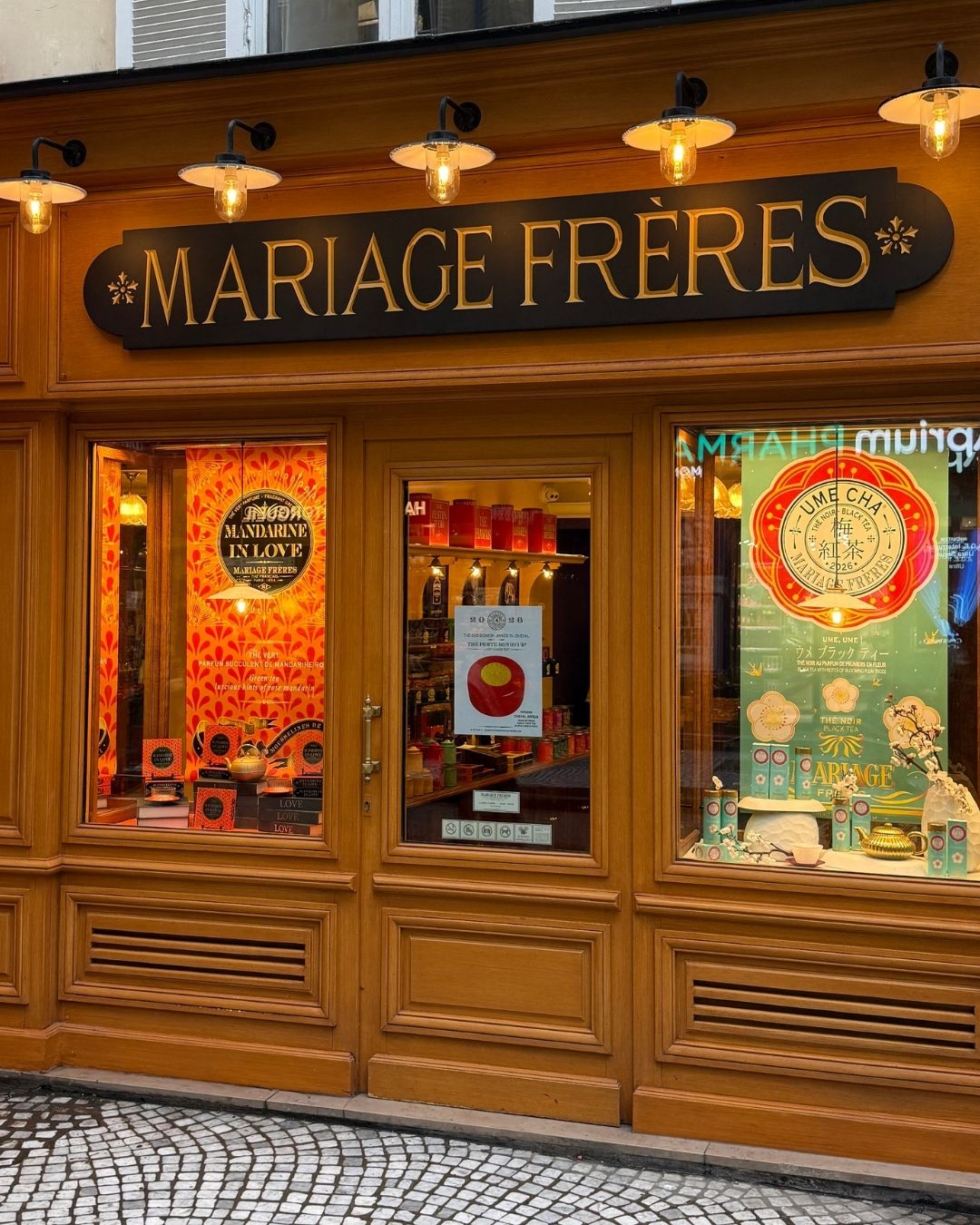
Mariage Frères

1854

30 rue du Bourg-Tibourg, 4th

France’s best-known tea house

Marco Polo, Wedding Impérial

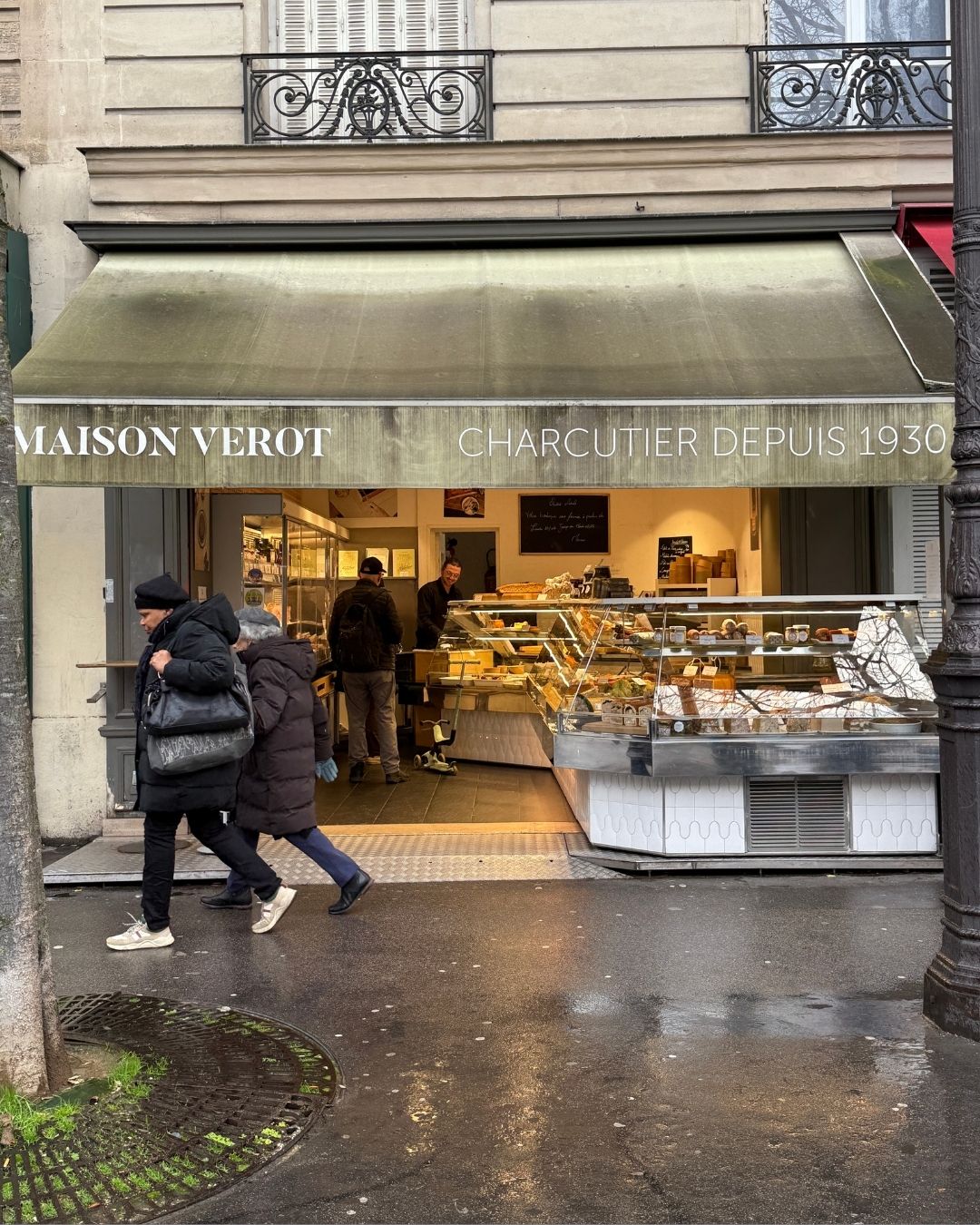
Maison Vérot

1930

3 rue Notre-Dame-des-Champs, 6th

Award-winning charcuterie

Pâté en croûte, terrines

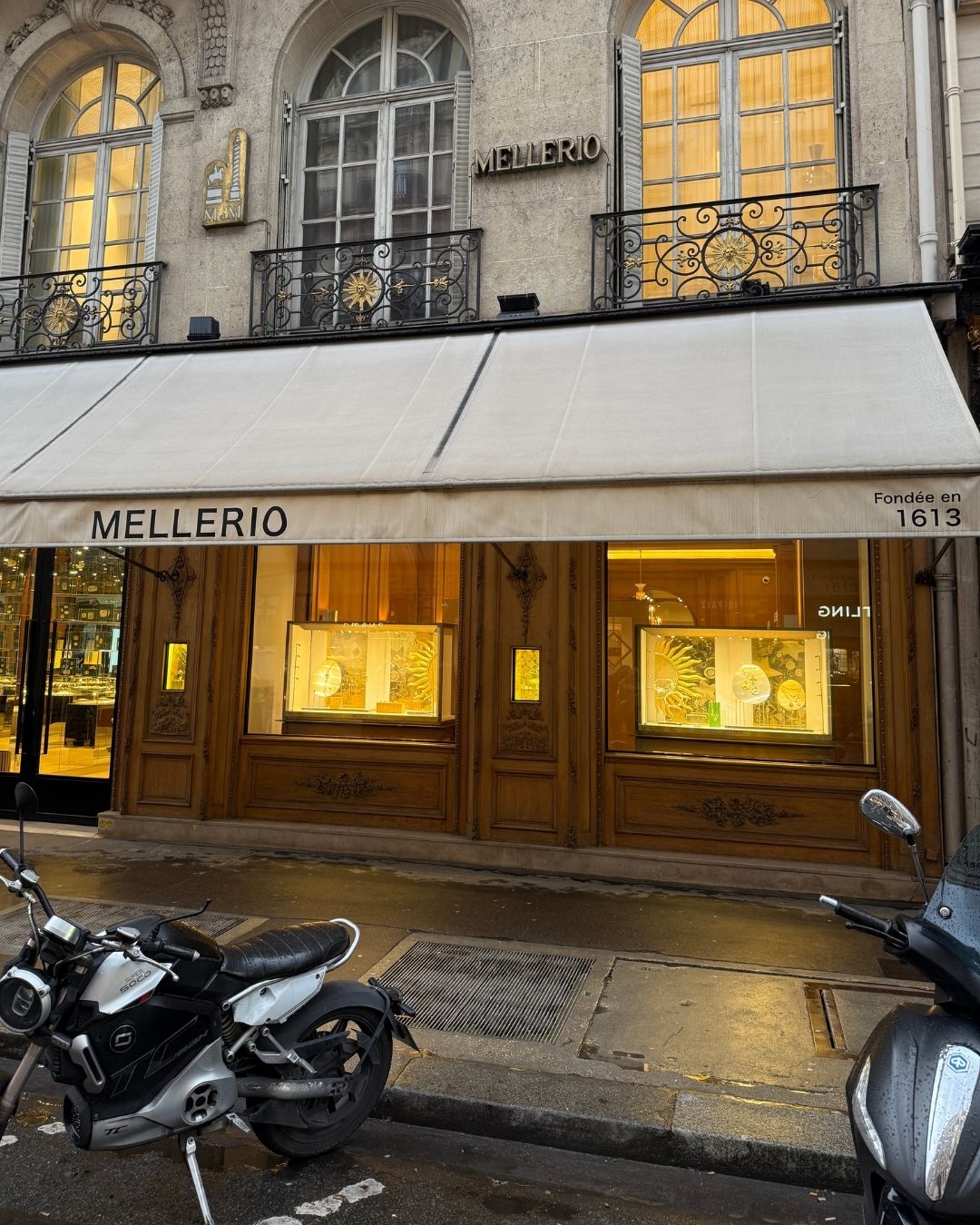
1. Mellerio dits Meller (1613): the oldest jeweller in Paris

In 1613, Queen Marie de Médicis granted special privileges to an Italian family of jewellers from the Vigezzo valley. Four centuries later, the same family still runs Mellerio dits Meller, widely described as the oldest family-owned jewellery house in Europe.

The name itself is a piece of history. “Dits Meller” means “known as Meller”, the French version of the family name that Parisians found easier to say. In 1815, Mellerio became one of the first jewellers to open on the brand-new rue de la Paix, a few steps from Place Vendôme, and the boutique and its workshop are still there today.

Over the centuries, Mellerio has worked for queens and empresses, from Marie de Médicis to Marie-Antoinette, Empress Joséphine and Empress Eugénie. The house even gave its name to a gem cut: the Mellerio cut, a 57-facet oval.


What to buy: pieces start at around €500 and go as high as you can imagine. This is jewellery made to be passed down, not a holiday trinket.

Guide’s tip: even if you are not buying, look through the windows and up at the façade. Combine it with a walk around Place Vendôme, the heart of Paris high jewellery.

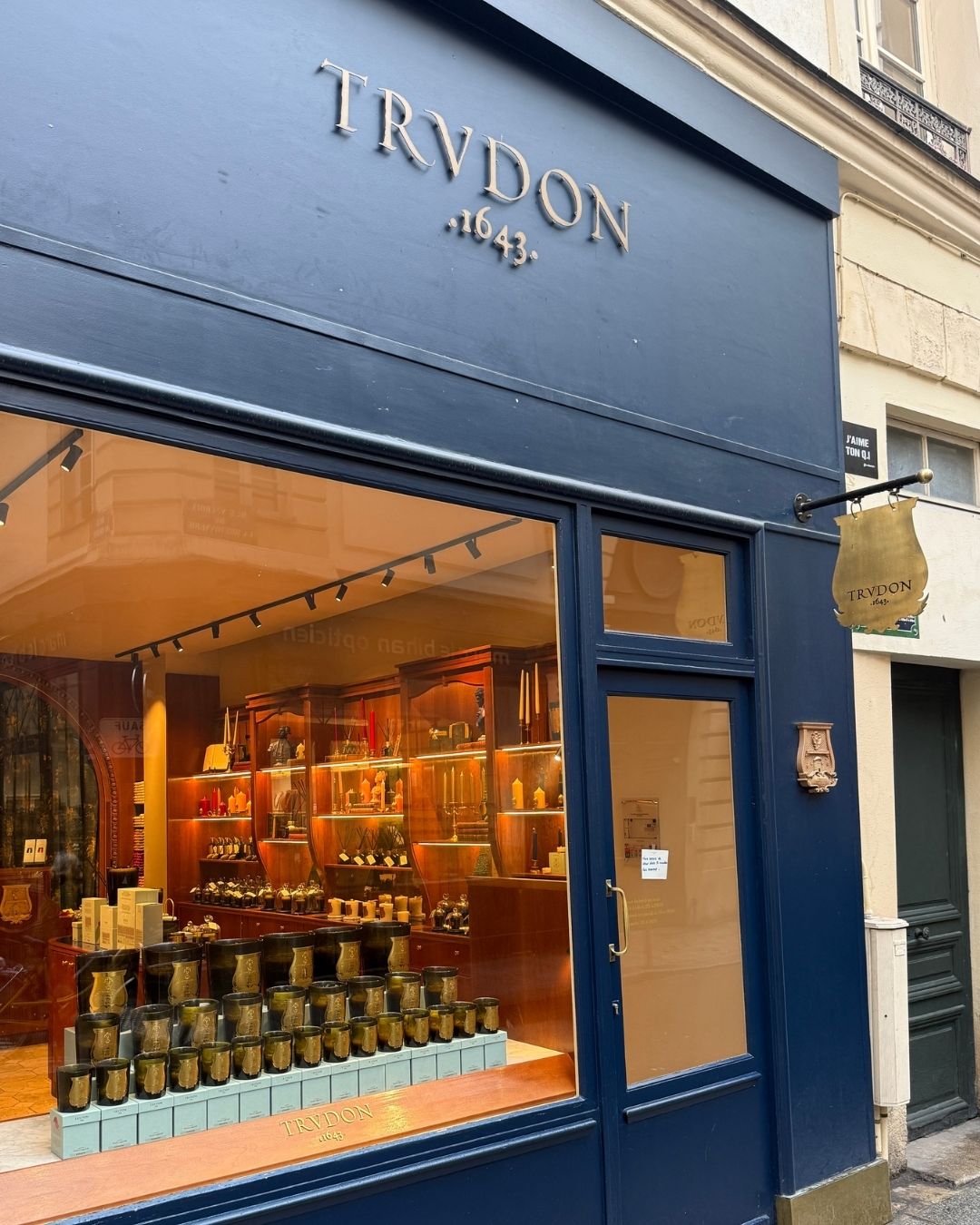
2. Trudon (1643): candles for Versailles

In 1643, Claude Trudon took over a shop on rue Saint-Honoré, selling groceries and candles to his neighbours and to the parish church. That year, Louis XIV was a four-year-old boy, and Versailles was still his father’s modest hunting lodge, decades away from becoming the most famous palace in the world.

As Versailles grew, so did Trudon. In 1737 Jérôme Trudon bought the Royal Wax Manufacture in Antony, south of Paris, and became official candle supplier to the French court. Thousands of Trudon candles lit the Hall of Mirrors during royal balls and burned in the Royal Chapel until the end of the monarchy; the house later served Napoleon’s imperial court too. It is often called the oldest candle maker in the world still in business.

On our private guided tours of Versailles, we love telling this story as you stand under the chandeliers of the Hall of Mirrors and imagine them lit by candlelight. Pick up a Trudon candle in Paris before or after your visit, and you take a little of that royal glow home with you.

What to buy: a scented candle from the Versailles collection, or a set of the classic white or coloured taper candles, close to what lit the royal palaces. Small glass candles make an easy, light gift to carry home.

Guide’s tip: the flagship at 78 rue de Seine sits in the heart of Saint-Germain-des-Prés. Pair it with the art galleries on the same street, then a coffee near Saint-Sulpice. Visiting Versailles on your trip? Stop here first, and the palace’s candlelit evenings will mean a lot more.

3. À la Civette (1716): the oldest tobacconist in Paris

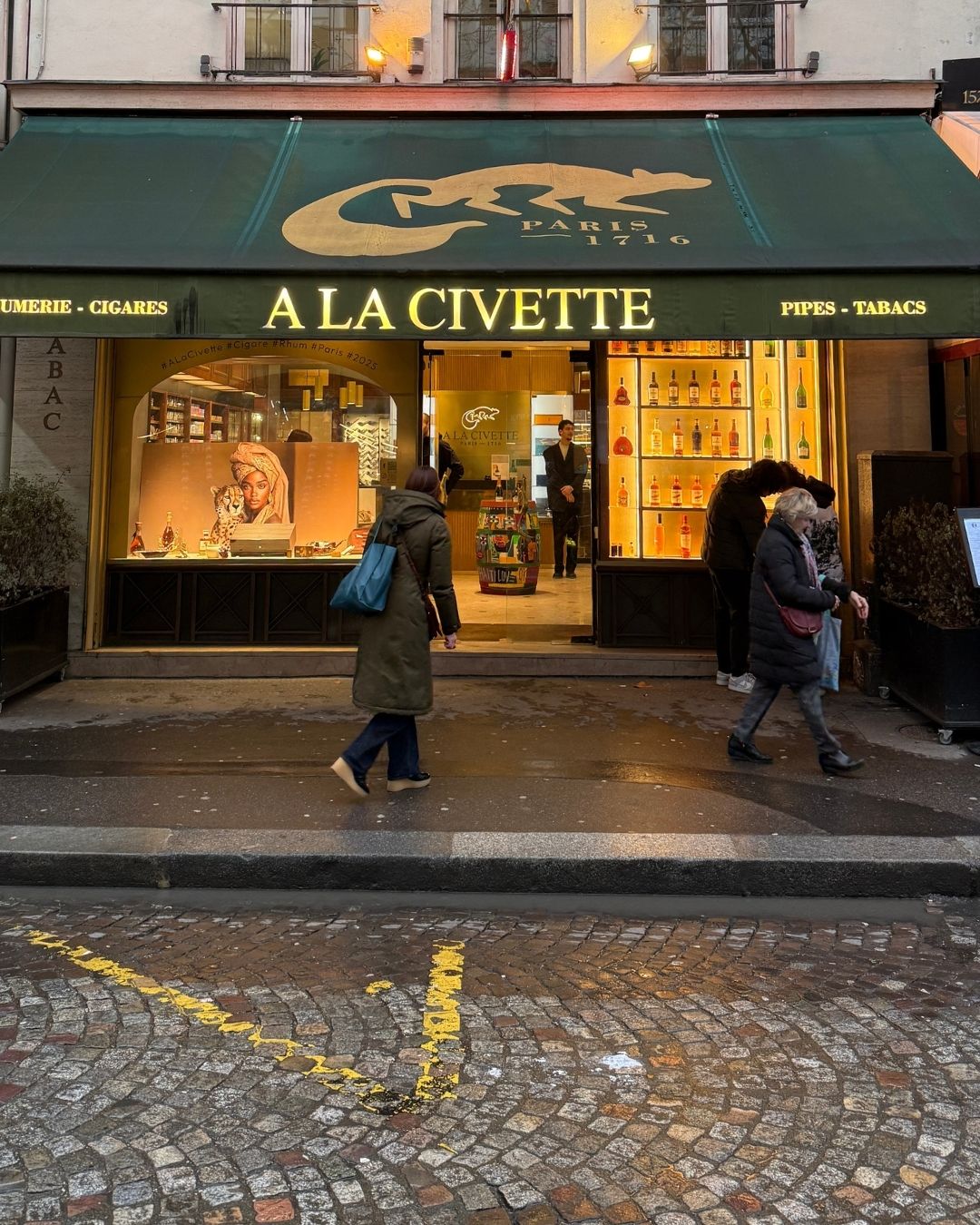
Opposite the Comédie-Française, under a green awning with a golden civet, stands what claims to be the oldest tobacco shop in the world still in business. À la Civette opened in 1716 near the Palais-Royal, moved several times along the same street, and has been at 157 rue Saint-Honoré since 1876.

Legend says the shop was struggling until the Duchesse de Chartres, a pipe smoker, became a customer and the whole court followed her. The guest list since then reads like a history book: Casanova, Lafayette, Robespierre, Napoleon III, Verlaine and Degas are all said to have come through its doors. The name comes from the civet, a small animal whose musk was once used in perfume and to scent tobacco.

What to look for: the original wooden display cases, antique tobacco cutters and, for non-smokers, collectible objects such as vintage-style lighters.

Guide’s tip: this is a quick stop on a walk between the Louvre and the Palais-Royal gardens. Come for the décor and the stories, then cross the street to the Palais-Royal.

4. Stohrer (1730): the oldest pastry shop in Paris

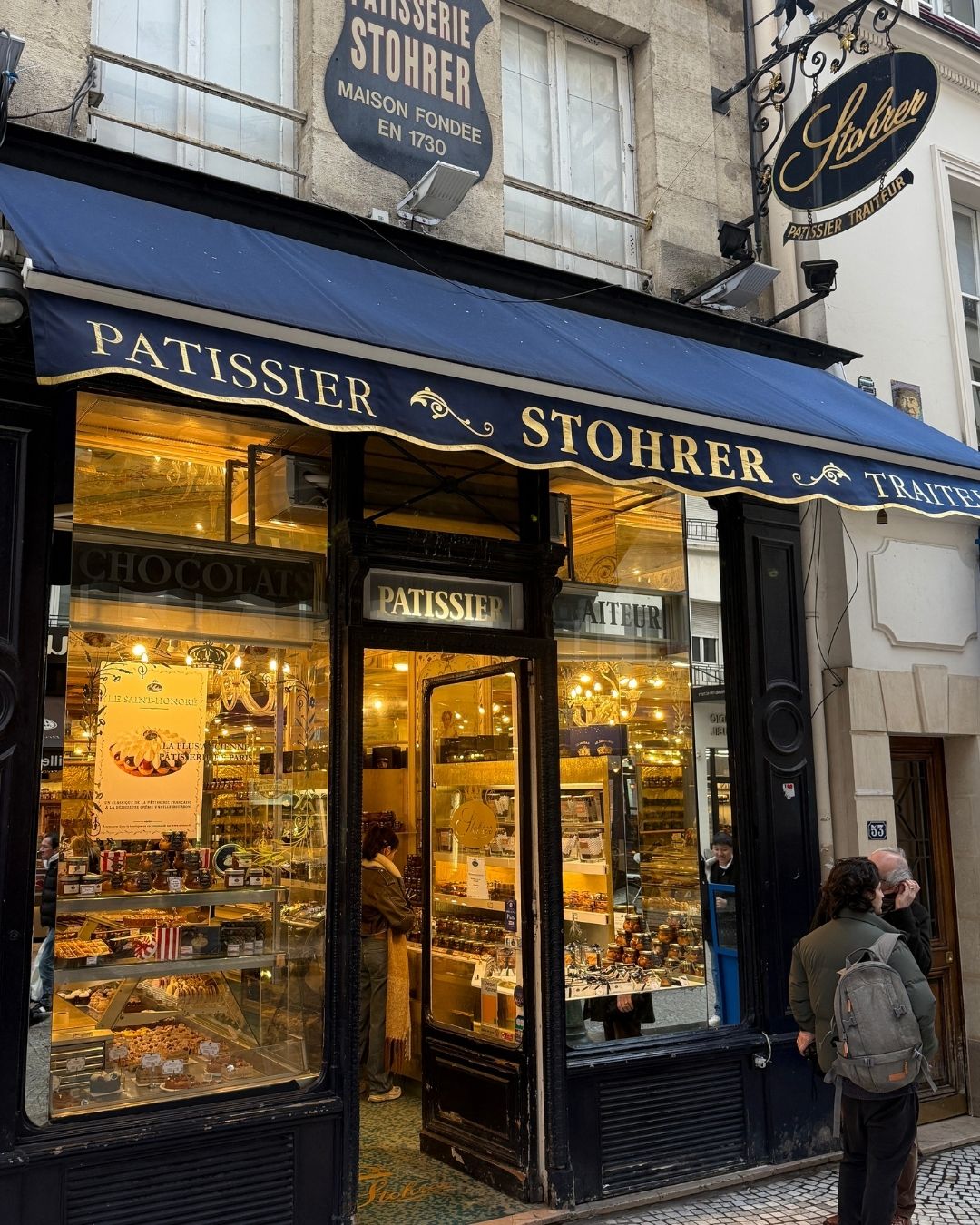
If you only visit one shop on this list, make it Stohrer. Nicolas Stohrer was pastry chef to the exiled King Stanislas of Poland, then followed his daughter Marie Leszczyńska to Versailles when she married Louis XV in 1725. In 1730 he opened his own shop at 51 rue Montorgueil, and it has never moved. Its painted interior is now a listed historic monument.

Stohrer is where the baba au rhum was born. The story goes that he soaked a dried-out brioche in a rum syrup, the court loved it, and he named it after Ali Baba. The shop also made famous the puits d’amour (“well of love”), a puff pastry filled with vanilla cream and topped with caramelised sugar, which legend says Louis XV gave to his mistresses. Its savoury cousin, the bouchée à la reine, was created in honour of the queen.


Tasting a pastry in the shop where it was invented, three centuries later, is the kind of moment you take home as a memory. Stohrer is a natural stop on rue Montorgueil, one of the city’s great market streets, alongside cheese shops, bakeries and the local producers Parisians actually buy from. If you are into discovery history through the palate, you may enjoy our guided food tour in the Marais.

What to buy: the baba au rhum (generous on the rum, so maybe not for the kids) and the puits d’amour. Skip the croissant here; that is not what this house is about.

Guide’s tip: rue Montorgueil is one of Paris’s liveliest market streets. Come in the morning, take your pastries to go, and wander the cheese shops and greengrocers around it.

5. Meert (1761): the vanilla waffles of kings

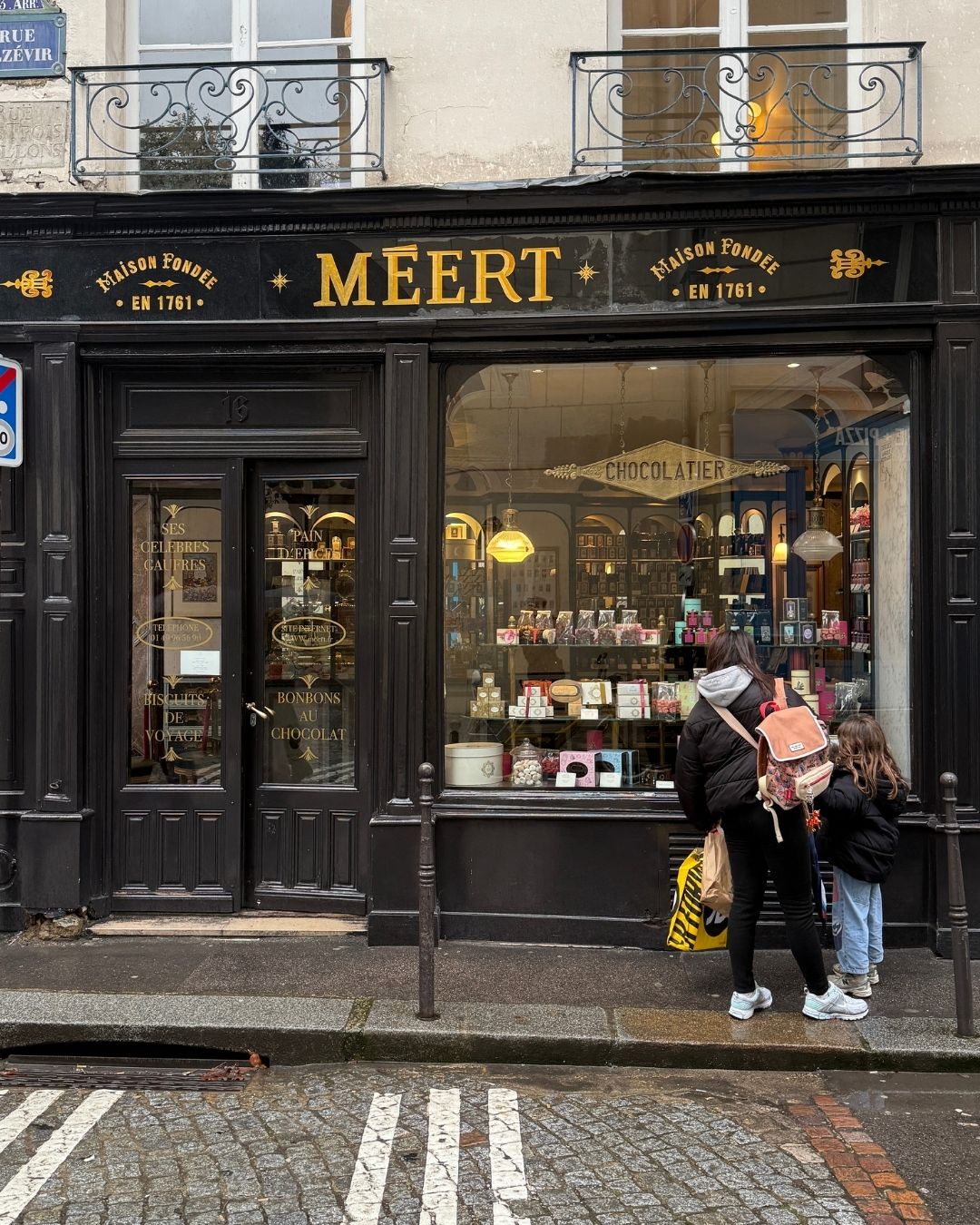
Meert began in 1761 as a confectioner on rue Esquermoise in Lille, in the north of France, and later became official supplier to King Leopold I of Belgium. Its fame rests on one thing: the gaufre Meert, a paper-thin waffle filled with Madagascar vanilla cream, made to a secret recipe since 1849.

You no longer need to take the train to Lille. Meert opened in the Marais around 2010, on the corner of rue Elzévir, with an interior inspired by the original Lille shop: carved wood, painted panels and glass display cases. It is one of the prettiest shopfronts in the neighbourhood, and children love pressing their noses to the window.

The Marais is one of the best neighbourhoods in Paris for eating your way through history, from old Jewish delis on rue des Rosiers to the Marché des Enfants Rouges, the city’s oldest covered market. A Meert waffle is a sweet stop that families love on our private food tours in Paris, where your guide shares the story behind every bite.

What to buy: a box of the classic vanilla waffles. They come in elegant boxes that make a ready-made gift, and they keep for about 10 days, so they travel well.

Guide’s tip: the shop is two minutes from the Picasso Museum and the Carnavalet, the museum of the history of Paris. A waffle break between the two is a reliable way to keep a family group happy.

6. E. Dehillerin (1820): Julia Child's favourite cookware shop

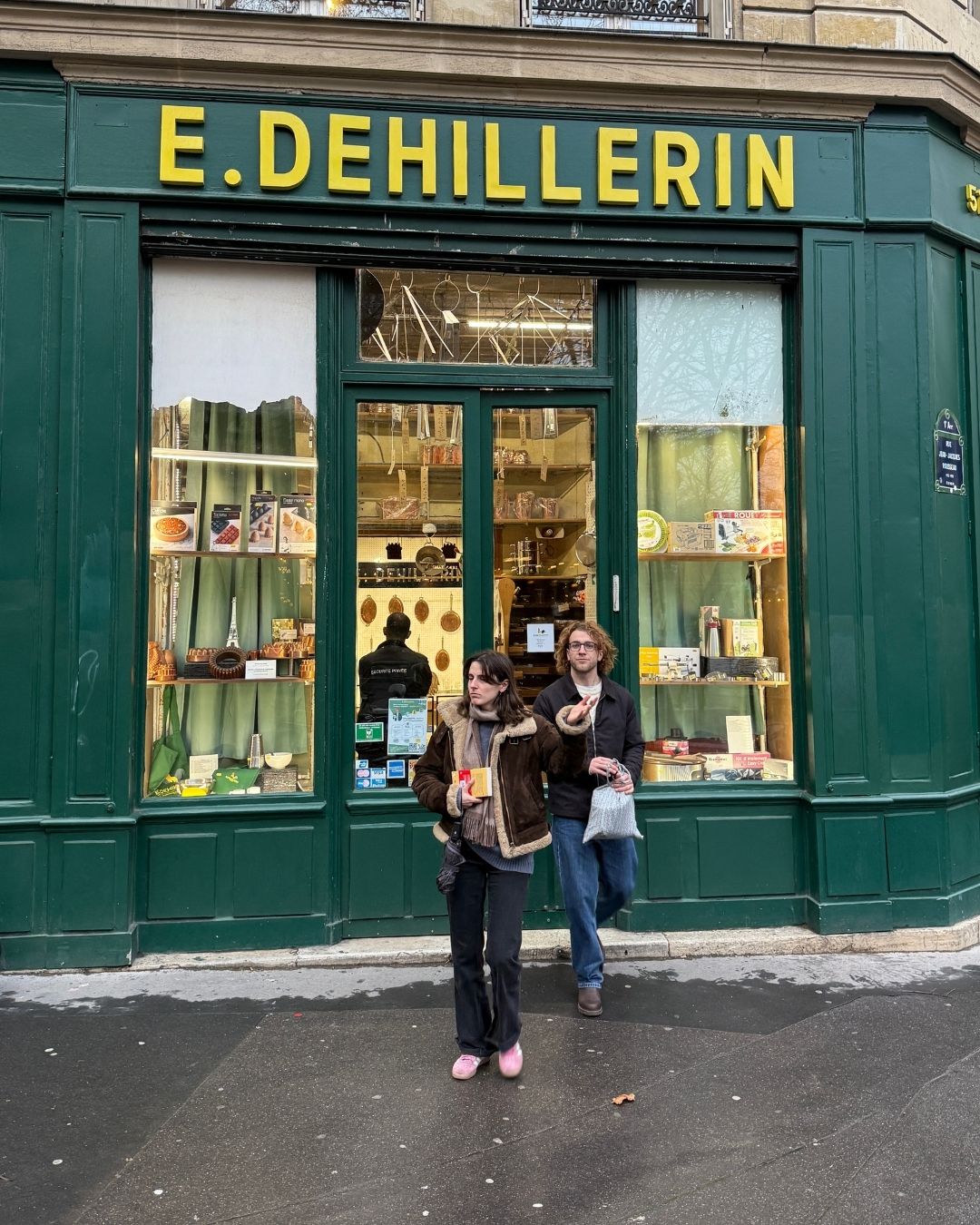
From the outside, E. Dehillerin is a modest green shopfront near the old Les Halles market. Inside, it is organised chaos: copper pots stacked to the ceiling, whisks of every size, knives, moulds and tools many visitors have never seen. Founded in 1820, it has supplied professional chefs for two centuries, along with the kitchens of ocean liners.

For American visitors, this is sacred ground. Julia Child shopped here after arriving in Paris in 1948, while she was learning French cooking. Her copper pans, hung on the famous pegboard designed by her husband Paul, are now displayed in her kitchen at the Smithsonian’s National Museum of American History in Washington.

What to buy: a copper sauté pan if you are serious about cooking (expensive, but built to last a lifetime), or something easy to pack: a tart ring, a pastry brush, a madeleine mould.

Guide’s tip: prices are often marked in a code or in a catalogue, so ask the staff, who are used to helping visitors. The shop is a short walk from the Bourse de Commerce and Saint-Eustache church.

7. Goyard (1853): the trunk maker of rue Saint-Honoré

A bonus stop for anyone walking rue Saint-Honoré. Goyard traces its roots to Maison Martin, a box and trunk maker founded in 1792, and took its current name in 1853 when François Goyard took over the business. The shop at 233 rue Saint-Honoré has stood on the same corner since 1834, and the address is printed on Goyard trunks to this day.

Goyard is famously discreet: little advertising, no flashy campaigns. Its chevron pattern, created by Edmond Goyard in 1892, is recognised by those who know.


Guide’s tip: look at the wooden façade and the window displays, which are works of art in themselves. Goyard also has a shop for dog and pet accessories further along the street, at number 352.

8. Mariage Frères (1854): the most beautiful tea shop in Paris

The Mariage family traded tea and spices from the 17th century, and in 1854 the brothers Henri and Édouard founded Mariage Frères. The flagship at 30 rue du Bourg-Tibourg, in the Marais, opened in the 1980s in the same building as the family’s old offices.

Step inside and you are in another century: floor-to-ceiling wooden shelves lined with black tea canisters, staff in cream linen suits, and the smell of hundreds of teas from more than 30 countries. Upstairs, a small museum displays antique tea chests and teapots.


What to buy: the two signature blends, Marco Polo (fruity and floral) and Wedding Impérial (black tea with caramel and chocolate notes). Both come in the iconic black tins and make perfect gifts.

Guide’s tip: the tea salon fills up at weekends, especially after lunch. Book ahead, or visit on a weekday afternoon and pair it with a walk through the Marais and Place des Vosges.


9. Maison Vérot (1930): the charcuterie where chefs shop

Maison Vérot is the youngest shop on this list, but it belongs to a family of master charcutiers going back four generations. Jean Vérot founded the business in Saint-Étienne in 1930; his son Pierre was named Meilleur Ouvrier de France; and his grandson Gilles opened in Paris in 1997 with his wife Catherine. Today their son Nicolas runs the house with them.

The Vérots helped bring French charcuterie back into fashion. Gilles Vérot won the French title for fromage de tête in 1997 and was a winner at the 2011 Pâté-Croûte World Championship. Their terrines and pâtés en croûte will make you rethink what “deli meat” means.

Charcuterie is one of the great unsung pleasures of French food, and most visitors never get past the supermarket ham. On a food tasting tour in Paris with one of our guides, you learn what makes a perfect pâté en croûte, which terrines to pair with which cheese, and how to put together a picnic Parisians would be proud of.

What to buy: a slice of award-winning pâté en croûte, a seasonal terrine or rillettes for a picnic. Ask the staff to wrap it for the day.

Guide’s tip: the original shop is at 3 rue Notre-Dame-des-Champs, near the Luxembourg Gardens, which is the perfect picnic spot. There is also a shop on rue de Bretagne in the Marais, near the Marché des Enfants Rouges.


These shops and how close they are to the famous monuments of Paris

Every shop on this list sits a few minutes’ walk from a monument you are probably already planning to see. Add one to your sightseeing day and you will barely need to change your route.

If you are visiting…

Stop at…

Walking time (approx.)

The Louvre and Palais-Royal

À la Civette (1716)

2–3 min

Place Vendôme and the Tuileries Garden

Goyard (1853), Mellerio (1613)

2–5 min

Opéra Garnier

Mellerio (1613)

5–7 min

Saint-Eustache Church and the Bourse de Commerce

E. Dehillerin (1820), Stohrer (1730)

2–5 min

Musée Picasso, Musée Carnavalet and Place des Vosges

Meert (1761)

2–8 min

Hôtel de Ville and Notre-Dame

Mariage Frères (1854)

3–10 min

Saint-Germain-des-Prés and Saint-Sulpice

Trudon (1643)

5 min

Luxembourg Gardens

Maison Vérot (1930), Trudon (1643)

8–10 min

Culture you can taste

Culture in Paris is not only in museums. It lives in a baba soaked in rum on rue Montorgueil, in the smell of 600 teas in the Marais, in a candle from the house that lit Versailles. Walk into these shops and you get a feeling for what it means to be French, one counter at a time.

Which shop would you visit first? And if you would like to discover these rare addresses with someone who knows their stories, contact us to plan your private tour of Paris.

Next on the blog: the oldest restaurants in Paris.

Get in touch with Joséphine & Ferit

If you have any questions about a trip, we will gladly give you some tips and explain our services more personally by email.

    Meet our Guides

    Leave a Reply